Cat care
Keeping Your Cat Hydrated in Puerto Vallarta’s Heat: Why Wet Food Matters
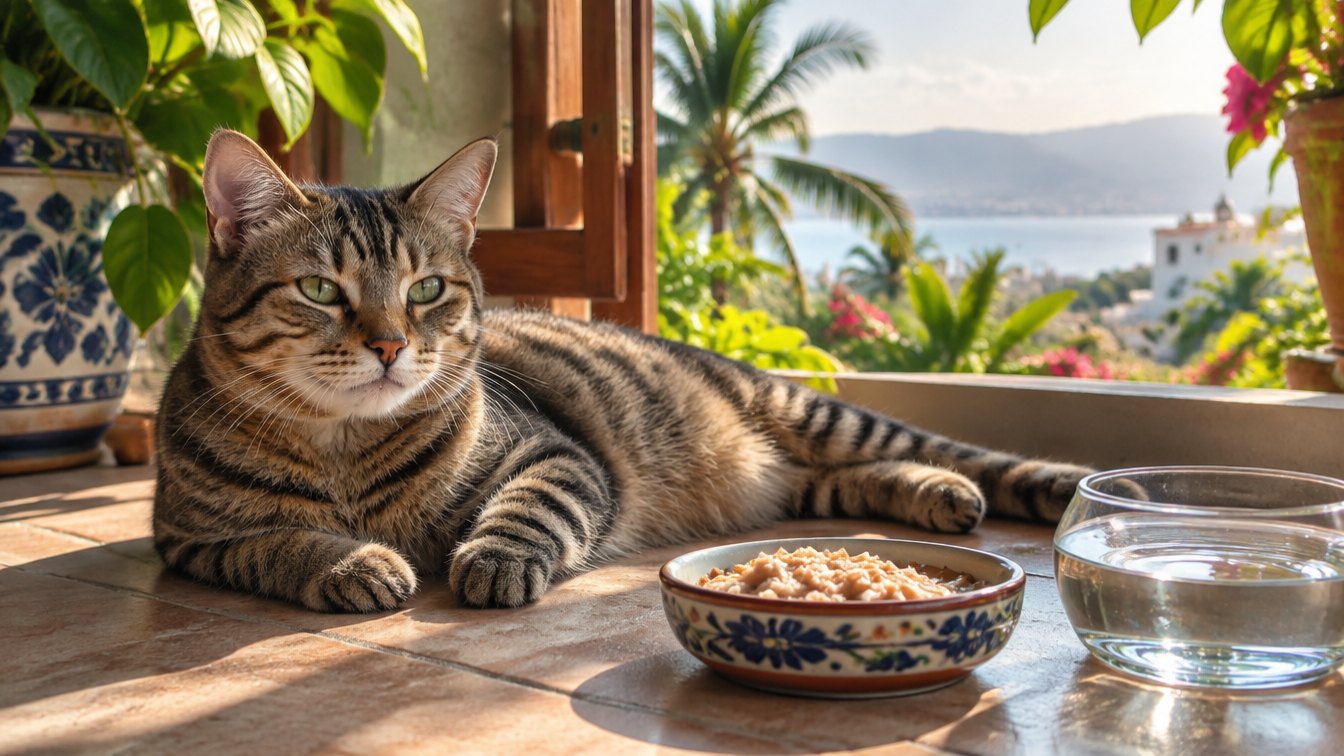
Here’s something many cat parents in Puerto Vallarta don’t realize: your cat is designed to get most of its water from food, not from a water bowl. Add six months of heat and humidity, a diet of dry kibble and an animal that hides discomfort, and you have a recipe for a cat that’s quietly running low on water.
This guide explains why cats drink so little, how Puerto Vallarta’s climate changes the picture, the warning signs to watch for, and practical, low-cost ways to keep your cat well hydrated, including the role of wet food.
Why cats don’t drink enough water
The domestic cat descends from desert-dwelling wildcats. In the wild, a cat’s prey (mice, birds, lizards) is roughly 70% water, so a hunting cat gets most of its daily fluid simply by eating. Over thousands of years, cats evolved with a low thirst drive and kidneys that are very good at concentrating urine to save water.
That system works well when the diet is moist. It works less well when a cat eats mostly dry food. A cat on kibble usually drinks more than a cat on wet food, but research and veterinary experience suggest it often still doesn’t make up the difference. Its total water intake ends up lower and its urine more concentrated.
Cats hide what they feel
Cats are both predator and prey, and showing weakness is risky, so they are experts at hiding discomfort. A mildly dehydrated cat may just look a bit quieter than usual, which is easy to miss in a hot month when everyone, humans included, is moving slowly.
What Puerto Vallarta’s climate means for your cat
Puerto Vallarta has two very different seasons. From roughly June to October, the city is hot and very humid, with daytime highs in the low-to-mid 30s °C, warm nights and frequent afternoon storms. The dry season, roughly November to May, is milder and sunnier, but spring days in April and May can still be very warm.
Heat matters because cats lose water through panting (in more serious cases), through grooming (saliva evaporating from the coat cools them) and through the pads of their paws. Indoor cats aren’t exempt: an apartment without air conditioning, a sunny window ledge or a closed room in the afternoon can get surprisingly hot.
Cats most at risk
- Senior cats, especially those with kidney, thyroid or diabetes issues. Your vet may already be monitoring their hydration.
- Flat-faced breeds such as Persians and Exotic Shorthairs, which cool themselves less efficiently.
- Long-haired and overweight cats, which hold more heat.
- Kittens, whose small bodies lose water quickly.
- Cats with a history of urinary problems, for whom vets often recommend a moisture-rich diet.
- Cats that eat only dry food.
Signs your cat may be dehydrated
Watch for these signs, especially during the hot months:
- Lethargy, hiding or less interest in play.
- Reduced appetite.
- Dry or tacky gums (healthy gums are moist and slippery).
- Sunken-looking eyes.
- Smaller or fewer clumps in the litter box, or very dark, strong-smelling urine.
- Constipation or small, hard stools.
- Panting or open-mouth breathing. In a cat this is never normal and needs prompt attention.
The skin tent test
Gently lift the loose skin between your cat’s shoulder blades and let go. In a well-hydrated cat it snaps back almost immediately. If it returns slowly or stays “tented”, your cat may be dehydrated. The test is less reliable in older or very thin cats, so treat it as a clue, not a diagnosis.
Wet food vs. dry food: the moisture difference
The numbers make the case on their own:
| Type of food | Approx. water content |
|---|---|
| Dry kibble | About 10% |
| Canned / wet food | About 75–80% |
| Fresh, gently cooked food | About 70–80% |
| A mouse (what cats evolved to eat) | About 70% |
A cat eating wet or fresh food takes in a large share of its daily water with every meal, much closer to how its body is designed to work. A cat eating kibble has to make up almost all of that by drinking, and as we’ve seen, many cats simply don’t.
Why vets care: urinary and kidney health
More water in means more dilute urine and more frequent trips to the litter box. That’s why veterinarians commonly recommend increasing moisture intake for cats with a history of urinary crystals, bladder inflammation (cystitis) or stones, and why hydration is a big part of managing kidney disease in older cats. Wet food isn’t a cure or a substitute for veterinary treatment. If your cat has a diagnosed condition, follow your vet’s plan, but water is one of the easiest things you can improve at home.
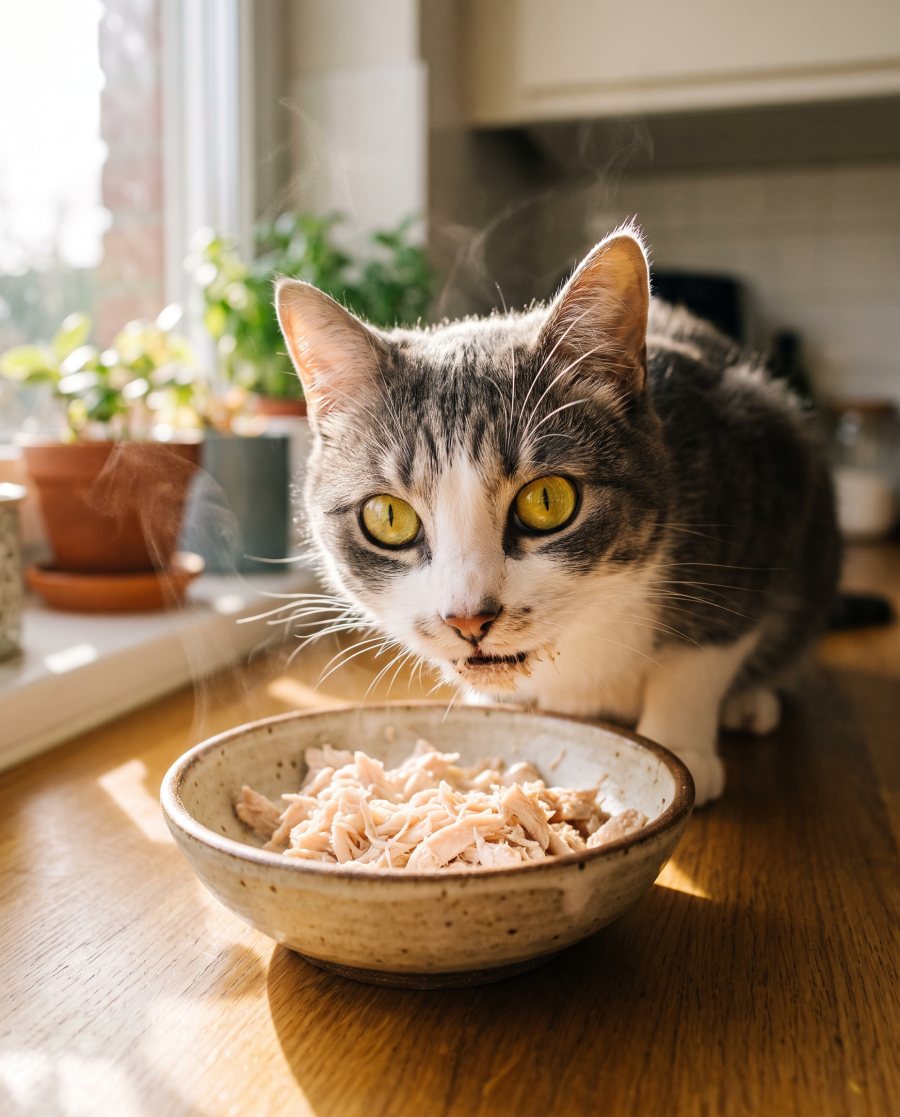
10 practical ways to keep your cat hydrated
1. Make moisture part of the menu
The single most effective change for most cats is adding wet or fresh food. You don’t have to drop kibble overnight: even one moist meal a day makes a real difference to total water intake.
2. Offer several water stations
Put bowls in different rooms and on different floors. Many cats prefer water that is not right next to their food and definitely not near the litter box.
3. Use wide, shallow bowls
Some cats dislike their whiskers touching the sides of a deep bowl. Wide ceramic, glass or stainless-steel bowls are easy to clean and don’t hold odors the way some plastics do.
4. Try a fountain
Many cats are attracted to moving water. A pet fountain keeps water circulating and can encourage extra drinking. Clean it and change the filter as the manufacturer recommends.
5. Change the water often
In the heat, standing water warms up and collects dust and hair fast. Refresh bowls at least twice a day in summer.
6. Add a splash of water to food
A tablespoon of fresh water mixed into a wet meal is an easy boost. Avoid store-bought broths unless they are made for pets: many contain salt, onion or garlic, which aren’t safe for cats.
7. Keep the house cool
Give your cat access to shaded, ventilated rooms, cool tiled floors and, if you have it, an air-conditioned space during the hottest hours. Close curtains on sunny windows in the afternoon.
8. Mind the ice-cube trick
A couple of ice cubes in the bowl can keep water cool and some cats enjoy batting them around. Keep it simple and supervise if your cat tends to chew hard things.
9. Groom long-haired cats
Regular brushing removes loose undercoat so heat escapes more easily. Ask a groomer or your vet before shaving a cat; it’s not always a good idea.
10. Track the litter box
The litter box is your best daily health monitor. Get to know what “normal” looks like for your cat, so you notice quickly if clumps become fewer or smaller.
Feeding wet food safely in a hot climate
Moist food is great for hydration, but in Puerto Vallarta’s heat it also spoils faster than kibble. A few habits keep it safe:
- Serve and pick up. Don’t leave wet food out for hours. On a hot day, remove leftovers after about 20–30 minutes.
- Thaw in the fridge, not on the counter. Move the next portion from the freezer to the fridge the night before.
- Serve it cool or at room temperature, not straight from the freezer, and never hot.
- Wash bowls after every meal. Ants and flies find leftovers quickly in tropical weather.
- Follow the storage times for your food. Ours keeps up to 5 months frozen and 2 weeks in the fridge once thawed.
How to switch a picky cat to wet or fresh food
Cats are famously attached to the textures and smells they know. Go slowly:
- Days 1–3: offer a teaspoon of the new food next to (not mixed into) the usual meal.
- Days 4–7: start mixing about a quarter of new food into the old.
- Week 2: move to half and half, then three quarters.
- Week 3 and beyond: complete the switch if your cat is eating well and stools are normal.
Some cats switch in a week, others need a month. That’s fine. Never let a cat go without eating to “force” a change: cats that stop eating for more than a day or two can develop a serious liver condition (hepatic lipidosis). If your cat refuses everything, go back to what it was eating and ask your vet.
Tips for fussy eaters
- Serve at room temperature. Aroma matters a lot to cats.
- Use a flat plate instead of a deep bowl.
- Feed small portions at set times rather than leaving food out all day.
- Sprinkle a few pieces of the old kibble on top as a familiar “topper”, then fade it out.
How much wet food does a cat need?
It depends on your cat’s weight, age and activity, and on the calorie content of the food. As a practical reference, one 500 g bag of our Cat Recipe lasts an average adult cat about 6 days. Kittens, very active cats and nursing queens need more; senior or less active cats may need less. Weigh your cat every few weeks during the transition and adjust portions to keep a healthy body shape: you should be able to feel the ribs easily without seeing them.
Kaplan’s Cat Recipe: made for moisture and protein
At Kaplan Pet Kitchen we cook in small batches here in Puerto Vallarta. Our Cat Recipe is made from the whole chicken, including organs like heart and liver, plus beef broth collagen and natural iodine. It’s moist, gently cooked and higher in protein than our dog recipe, because cats are obligate carnivores and need more of it. No fillers, preservatives or colorants.
- 500 g frozen bags, about 6 days of meals for an average cat.
- Monthly subscription: $328 MXN per bag, or a one-time order at $438 MXN per bag.
- Free home delivery in Puerto Vallarta (see delivery areas).
- Cash on delivery: no card, no app.
- Special diets: if your vet recommends less sodium or less protein, we adapt the recipe at no extra cost.
Want your dog to benefit too? Read our guide on fresh dog food vs. kibble in Puerto Vallarta.
Give your cat the moisture it was designed for
Subscribe in two minutes. We confirm your delivery by WhatsApp and you pay cash at the door.
Start my cat’s subscription Ask us on WhatsAppThis article is general information, not veterinary advice. Every cat is different. If your cat has a medical condition or shows any of the warning signs above, please talk to your veterinarian.
Frequently asked questions
How much water should a cat drink per day?
A common rule of thumb is roughly 40–60 ml of water per kilogram of body weight per day, counting the water in food. A 4 kg cat needs very roughly 160–240 ml in total. A cat on wet or fresh food gets a large part of that from its meals, so it may drink very little from the bowl, and that’s normal.
Is it normal that my cat on wet food barely drinks?
Yes. Fresh and wet foods are about 70–80% water, so many cats on a moist diet drink much less. What matters is total intake, healthy gums, normal energy and a normal amount of urine in the litter box.
Can I mix wet food and kibble?
Yes. A mixed diet is a common and practical choice. Even one moist meal a day increases total water intake. Just account for the calories of both so your cat doesn’t gain weight.
Is the heat in Puerto Vallarta dangerous for indoor cats?
It can be. Closed apartments without air conditioning can get very hot in the June–October season. Make sure your cat always has shade, airflow, a cool floor and fresh water, and never leave a cat in a parked car.
What are the signs of heatstroke in a cat?
Panting or open-mouth breathing, drooling, restlessness, red gums, vomiting, wobbling or collapse. Move the cat to a cool place, offer water, dampen the fur with cool (not ice-cold) water and contact a vet immediately.
Does Kaplan Pet Kitchen deliver cat food in Puerto Vallarta?
Yes. We deliver free all over Puerto Vallarta: Marina Vallarta, Versalles, Fluvial, Centro, Zona Romántica, Pitillal, Las Juntas and more. Nuevo Vallarta and Bucerías are on request. You pay cash on delivery.