Cat care
How to Switch Your Cat to Organic Food in Puerto Vallarta, Step by Step
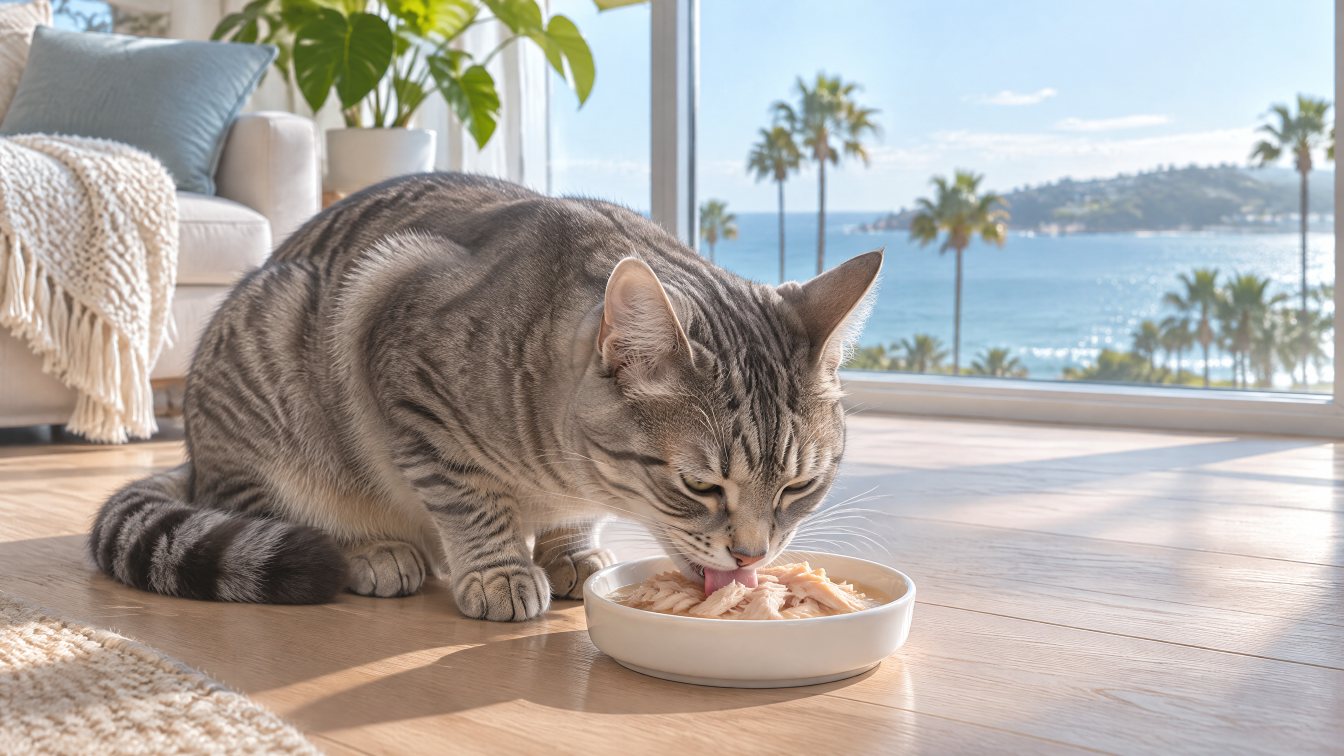
You’ve read the labels, you’ve decided your cat deserves better food, and you’ve found organic cat food in Puerto Vallarta. Then your cat sniffs the new bowl, looks at you and walks away. Sound familiar? Switching a cat’s diet takes a different approach than switching a dog’s, and this guide walks you through it.
This article is general information, not veterinary advice. Cats with kidney disease, urinary issues, diabetes or other conditions need a diet plan from their veterinarian.
Why cats are so hard to switch
Cats are not being difficult on purpose. A few things are going on:
- Food imprinting. Many cats form strong preferences about texture and smell in their first months of life. A cat raised on dry kibble may not even recognize wet food as food at first.
- Smell drives appetite. Cats decide whether to eat mostly by smell. Cold food smells less, which is why food straight from the fridge often gets rejected.
- Kibble is engineered to be tasty. Many dry foods are coated with palatability enhancers. Real food can taste “plain” in comparison until the cat gets used to it.
- Stress. A move, a new pet, visitors or the summer heat can all make a cat more conservative about food.
The one rule: never starve a cat into eating
With dogs, owners sometimes wait out a picky phase. Never do this with a cat. A cat that stops eating for more than a day or two, especially an overweight cat, can develop hepatic lipidosis (fatty liver disease), which is serious. The switch should always happen alongside the food your cat already accepts, never instead of it, until the cat is eating the new food reliably.
What cats actually need from their food
Before choosing what to switch to, it helps to know what a cat’s body expects:
| Need | Why | Where it comes from |
|---|---|---|
| High animal protein | Cats are obligate carnivores and use protein for energy. | Meat, poultry, fish, organs |
| Taurine | Essential for heart and eye health; cats can’t make enough on their own. | Muscle meat, especially heart |
| Vitamin A (preformed) | Cats can’t convert it from plants. | Liver and other organs |
| Water | Cats have a low thirst drive. | Moist food, plus a clean water source |
| Few carbohydrates | Cats have limited need for them. | Not much needed |
That’s why a good organic cat food is built around meat and organs, not grains or vegetables, and why moisture matters so much. We explain the hydration side in detail in keeping your cat hydrated in Puerto Vallarta’s heat.
The step-by-step switching plan
Week 0: prepare
- Pick a calm week, not the week of a move or a long trip.
- Set fixed meal times (for example morning and evening) instead of leaving kibble out all day. Cats that graze aren’t hungry at meal time, which makes new food harder to introduce.
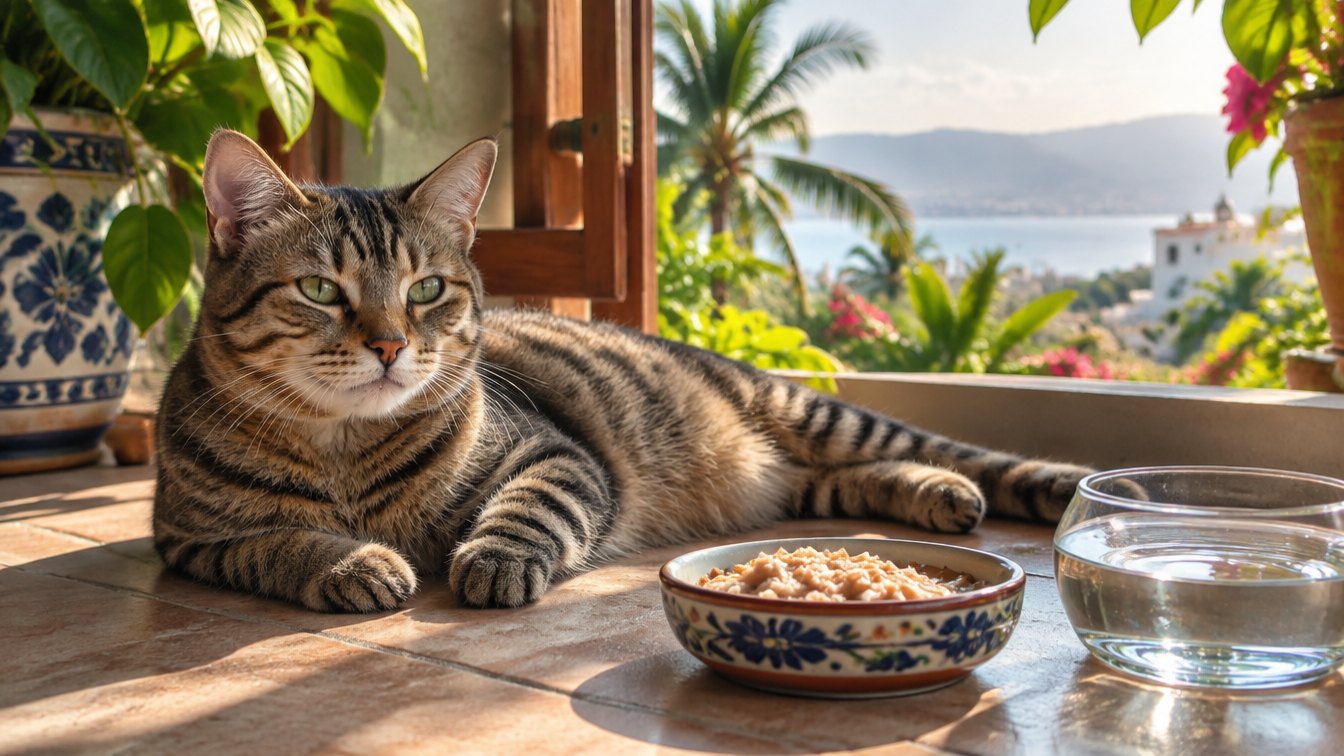
- Get a shallow, wide dish. Many cats dislike their whiskers touching the sides of a deep bowl.
Days 1–3: introduce the smell
Offer a teaspoon of the new food on a separate small plate next to the usual meal. Don’t mix it yet. Let your cat sniff, lick or ignore it. Remove what isn’t eaten after 30 minutes.
Days 4–7: start mixing
Mix about a quarter of the new food into the usual meal. If your cat eats dry food, you can crumble a few kibbles on top of the new food so the familiar smell leads the way.
Days 8–14: half and half, then more
Go to half and half, then three quarters. Watch the litter box: stools should stay formed. If they get soft, stay at the current ratio for a few more days.
Days 15–21 and beyond: full portion
Move to the full portion when your cat is clearly happy. Some cats switch in a week; seniors and long-time kibble eaters can take a month or more. Both are normal.
Tricks that work with picky cats
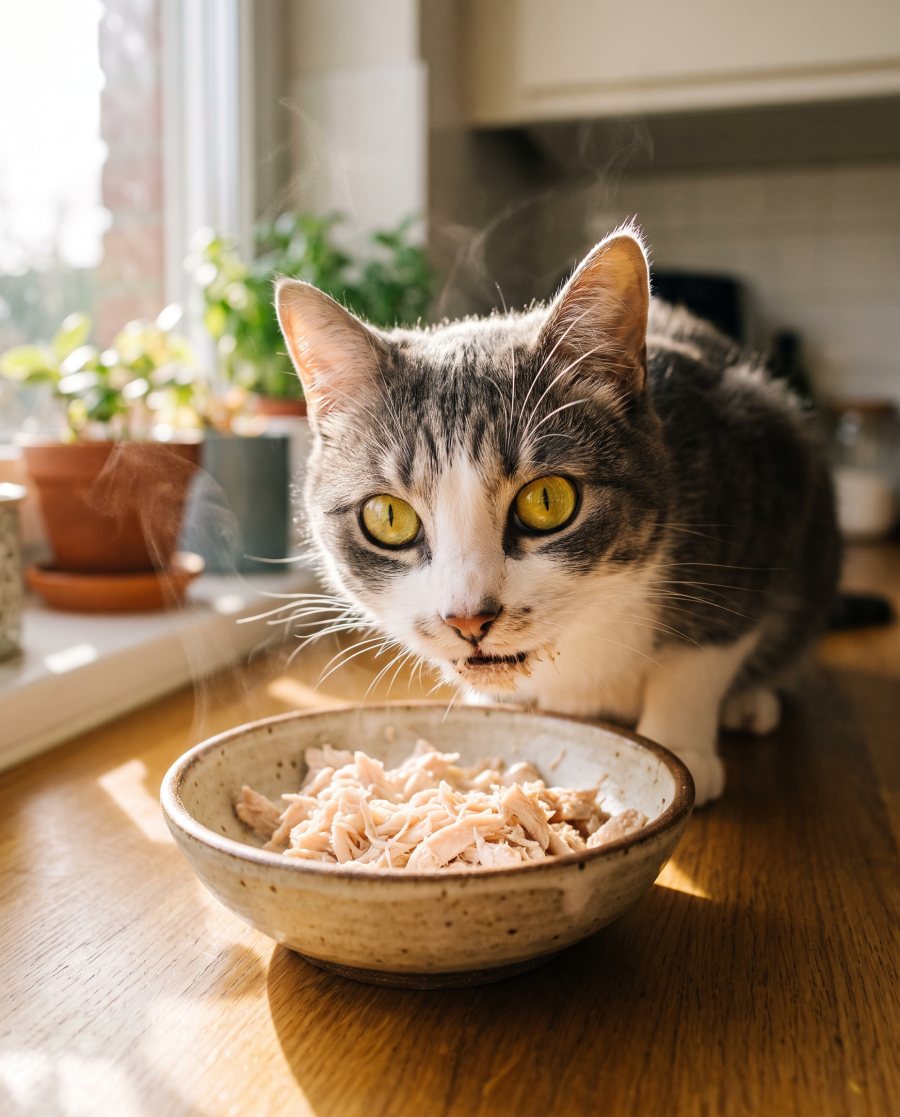
- Warm it slightly. Room temperature or just above, never hot. Stir and test with your finger.
- Add a spoon of the broth. A little of the cooking juices boosts the smell.
- Feed from your hand or a finger. Some cats will try anything you offer personally.
- Praise and play. A short play session before meals mimics hunting and builds appetite.
- Keep the old food for emergencies. If your cat refuses everything for a day, go back to the old food and slow down.
Mistakes to avoid
- Switching cold turkey. It’s the quickest way to a hunger strike or an upset stomach.
- Leaving wet food out all day. In Puerto Vallarta’s heat, moist food should be picked up after about 30 minutes.
- Adding lots of extras. Treats, tuna and milk during the switch make it harder to read your cat’s reactions. Milk often causes diarrhea in adult cats.
- Ignoring weight changes. Weigh your cat before you start and after a month. Adjust portions if needed.
- Forgetting water. Even on a wet diet, keep fresh water available, ideally in more than one spot.
How much organic cat food does a cat need?
A typical adult indoor cat of 4–5 kg eats about 60–80 g of fresh wet food per meal, twice a day. In practice, one 500 g bag lasts one cat about a week. Kittens need more per kilo; seniors and overweight cats often need less. Your vet can tell you your cat’s ideal weight.
Storing fresh cat food safely in a hot climate
- Keep bags frozen (up to about 5 months for our bags).
- Thaw one bag at a time in the fridge, not on the counter.
- Once thawed, use within about 2 weeks and keep it sealed.
- Serve only what your cat eats in one meal and throw away leftovers after 30 minutes, especially from June to October.
Special cases: kittens, seniors and multi-cat homes
Kittens
Kittens are the easiest to switch because their food preferences aren’t set yet. That’s also why it’s worth introducing several textures early on. Kittens need more energy and protein per kilo than adults, so feed three or four small meals a day and ask your vet how much your kitten needs as it grows.
Senior cats
Older cats often lose some sense of smell and appetite, and many develop kidney changes as they age. A moist, aromatic food helps with both appetite and water intake. Before changing a senior cat’s diet, get a check-up and blood work so you know whether protein or phosphorus need adjusting.
Homes with several cats
Feed each cat from its own dish, in separate spots if possible, so you can see who is eating what. A dominant cat may steal food while a shy cat quietly goes hungry. Switch all cats at the same pace, but watch each one individually.
Cats with health conditions
Cats with kidney disease, urinary crystals, diabetes, hyperthyroidism or food allergies often need a specific diet. Don’t switch without your vet’s plan. A good local kitchen can adapt a recipe (for example, less sodium or less protein) when your vet tells them what’s needed.
Signs the switch is working
- Your cat comes to the dish at meal time and finishes most of the portion.
- Stools are formed and regular, and you see normal clumps of urine in the litter box (often more than before, which is good: it means more water is going through).
- The coat looks shinier and softer after a few weeks.
- Weight is stable, or moving slowly in the direction your vet recommended.
- Energy is normal or better, and your cat isn’t begging constantly between meals.
Warning signs: vomiting more than occasionally, diarrhea that lasts more than two days, refusing food for more than a day, straining in the litter box or blood in the urine. Any of these is a reason to call your vet, regardless of the diet.
Myths about organic cat food
- “Dry food keeps a cat’s teeth clean.” Most cats swallow kibble with little chewing, so the cleaning effect is small. Dental care comes from brushing, dental checks and specific dental products.
- “Cats on wet food don’t need water.” They need less from the bowl, but fresh water should always be available.
- “Cats can be vegetarian if the food is organic.” No. Cats need nutrients that come from animal tissue, like taurine and preformed vitamin A.
- “Fish is the most natural food for cats.” Most cats love fish, but a diet based only on fish isn’t ideal. Poultry and organ meats are an excellent everyday base.
- “Indoor cats in an apartment don’t feel the heat.” A closed apartment in Puerto Vallarta in August can be very hot. Moist food, water stations and airflow all help.
A sample daily routine during the switch
| Time | What to do |
|---|---|
| Evening before | Move the next day’s portion from the freezer to the fridge. |
| Morning meal | Let the food sit 15–20 minutes to reach room temperature; mix with the usual food at today’s ratio; pick up leftovers after 30 minutes. |
| Midday | Refresh water; a short play session. |
| Evening meal | Same as the morning; note in your phone how much was eaten. |
| Every few days | Check the litter box and, once a week, weigh your cat. |
Organic cat food in Puerto Vallarta from a local kitchen
At Kaplan Pet Kitchen we make organic cat food in Puerto Vallarta for exactly this kind of switch: a moist, high-protein Cat Recipe cooked from the whole chicken including organs such as heart and liver, with beef broth collagen and natural iodine. No fillers, no preservatives, no colorants. It has more protein than our dog recipe because cats need it.
- Monthly plan: $328 MXN per 500 g bag. One-time order: $628 MXN per bag, ideal to test the switch.
- Free delivery across Puerto Vallarta, Nuevo Vallarta and Bucerías on request, cash on delivery.
- Need less protein or sodium for a medical reason? Send us your vet’s instructions.
When we say organic we mean whole, natural, minimally processed ingredients, and we’re happy to explain exactly what is in every bag.
Have a dog too? Read how to choose organic dog food in Puerto Vallarta.
Ready to start the switch?
Order one bag to try, or subscribe monthly. Free delivery in Puerto Vallarta.
See our organic cat food Ask on WhatsAppFrequently asked questions
How long does it take to switch a cat to new food?
Usually two to three weeks, but some cats need a month or more. Go slowly, keep the old food available and never let your cat go without eating.
My cat refuses the new food completely. What now?
Go back to the old food, then reintroduce the new one in tiny amounts on a separate plate. Warm it to room temperature, add a little broth and use a shallow dish. If your cat stops eating for more than a day, call your vet.
Is organic cat food better than regular cat food?
Certified organic refers to how ingredients are farmed. For cats, what matters most is high animal protein, organ meats for nutrients like taurine and vitamin A, and plenty of moisture. A fresh, meat-based food that ticks those boxes is a big step up from most dry food.
Can I feed my cat dog food?
No. Dog food doesn’t contain enough protein, taurine or vitamin A for cats. Always use a recipe made for cats.
Is fresh cat food safe in hot weather?
Yes, if you store it properly: keep it frozen, thaw in the fridge and remove uneaten food after about 30 minutes.
Where can I buy organic cat food in Puerto Vallarta?
Kaplan Pet Kitchen makes a fresh, high-protein Cat Recipe in Puerto Vallarta and delivers it for free across the city, with Nuevo Vallarta and Bucerías on request. You pay cash on delivery.